The Ugly Librarian Incident
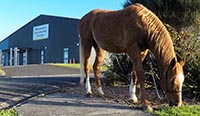
Emotionally compromised Librarian has bought about vindictive Trespass Order preventing local elder from accessing Community Health care for urgent medical care.
The Ugly Librarian event late last year where the Librarian overstepped his job description in his dispute with the elder about his horse resulted in a vexatious trespass order. The Meremere elder is prevented from seeking urgent and basic medical care from the Health Clinic at the Community Hall Clinic.
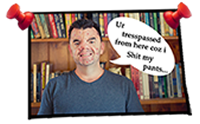 The basis for the heavy handed 2yr trespass order was illegitimate and issued without due investigation, negotiation or reconciliation. Security camera evidence exists showing the reality of the situation, how it was provoked by the ugly behavior of the librarian and the needlessness of the Trespass Order.
The reasoning for the trespass order was the misrepresented events stemming from dog attacks on the elder, his horse and others people in the village and the inadequate Council Animal Control response for stray dog attacks. The incident was actually provoked by the Librarian.
DNA Reveals The Polynesians Weren't From Where We Thought
Everything we are told is a LIE...
meremere.nz ~ What the Development Committee or Kaumatua won't tell you...
Remenber who pushed the lie about Covid!...
I don’t know who put this together but it’s one of the most amazing compilations put together. Actually perfect. pic.twitter.com/PwDN0TDIZG
— Jim Verdi (@jjverdi) August 1, 2026
CALLING OUT REALITY
DISCLAIMER: We are completely disengaged with our/your world-view, these pages are for awareness and sharing information only.
1. Be mature and of sound mind.
 2. Explore with CAUTION.
Chris Webby - Raw Thoughts VII DOWNLOAD >>> MP4 MP3

NEW: Israel is preparing to begin moving Palestinians into CONCENTRATION CAMPS in Gaza within weeks.
— Suppressed News. (@SuppressedNws1) July 2, 2026
According to Israel Hayom, unarmed civilians would be directed into a fenced camp in Tel al Sultan near Rafah, while a foreign force operating under the Trump administration’s… pic.twitter.com/066X7bgAMO
To the people of Iran 🕊️🩷 pic.twitter.com/gmnmaMfeid
— Alana Smaragda (@AlanaSmaragda) May 23, 2026
World oil reserves drain at record pace ? Bloomberg
Countdown begins: Former central bank advisor warns food-price shock could hit "within 6 to 9 months"
Here is the updated list of US-based food manufacturing plants destroyed while Biden's been in office
Are you paying attention?
ISRAEL IS COMPLETELY HUMILIATED
Link in the comment. Someone replied and showed a clip of Ben Gvir celebrating this passage of the law by opening champagne. This is an open genocide now by israel
by u/Stimul8ed in conspiracy
The economic destruction of Trump's war: Much more than just high gas prices
The $100 Trillion Game: How the Iran?Israel War Could Collapse the Global Financial System
The gentiles must learn...
Professor gets 4 million views in 1 day. Says Israel is key to the end times and Illuminati is following the script.
by u/NewPortBox100s in conspiracy
Get ready for the Crash!!! High energy, living costs and food shortages...
34% of the global fertilizer supply travels through the Strait of Hormuz.
— Financelot (@FinanceLancelot) March 3, 2026
If this is a prolonged war with Iran it could cause a global food shortage.pic.twitter.com/9BWvkoz5xD
How Intelligent People Should Deal with Stupid People ? Schopenhauer?s Philosophy
Cold Kills ? New huge US study links colder months to 40 times as many deaths as warmer ones
Iran War & Fuel Rationing - are 'Energy Lockdowns' on the way?
Ali Khamenei's(The guy they just killed) fatwa against nuclear weapons
This Is The NEW Butter (And You?ll Be FORCED To Eat It)
Declassified CIA files reveal chilling blueprint to manipulate Americans' minds through covert drugging with vaccines
Israel CAUGHT Mass Surveilling Christians At Church! w/ Ian Carroll
History Before The 1600s Is Fake, Here's Why...
Turning Point Fedslop EXPOSED ? Candace Drops MAJOR Info and Zorro Ranch BOMBSHELL | #12
SNEAKO X Professor Jiang FULL INTERVIEW
SNEAKO Interviews Ian Carroll about Epstein!
Your Brain Won't Let You See What Epstein Really Was - Barry's Economics
Ian Carroll Uncovers Demonic Epstein Files
Esoteric & Occult Practice & Secret Society Study
Secret History #END: Pax Judaica
Residential Addiction Management & Therapy
THE COVIDIOT. This is the tragic story of The Covidiot, who couldn't think for himself, and trusted the authorities, no matter how ridiculous their rules were. Even now, after millions have died, the Covidiots are eagerly lining up for the next round of killer shots. pic.twitter.com/XhcEw3kBog
— david barbelo (@DavidBarbelo) December 9, 2025
Te Taiao
Voices of the Tui & Wings of the Kereru
(Maori) means the natural world, encompassing land, water, climate, and all living things, emphasizing a deep, interconnected relationship where humans are part of nature, not separate, stressing respect, reciprocity, and care for the environment as the source of life and well-being for future generations. It's a concept of unity, summarized by the phrase "Ko au Te Taiao, ko Te Taiao ko au" (I am nature, and nature is me).
Key aspects of Te Taiao:
Interconnection:It highlights the links between land, rivers, oceans, air, native species, and humans.
Source of Life:Considered the foundation of health and life.
Responsibility:A call to care for the environment for future generations (e.g., Tiaki te taiao - Take care of nature).
Holistic Components:Often broken down into whenua (land), wai (freshwater), ahuarangi (climate), and koiora (living communities).
Rhythms & Systems:Recognizes the constant changes and systems within nature, encouraging slower observation and awareness in daily life.
In practice:
It's a core principle in environmental management and conservation in Aotearoa New Zealand, guiding policies and actions. It fosters a mindset of living in harmony with the environment, seeing ourselves as integral to it.
Are you interested in the development and production of a Matauranga Maori Geo-Location Adventure Game Progressive Web App (PWA) Taonga for the collection and distribution of this intelligence. Please get in touch.
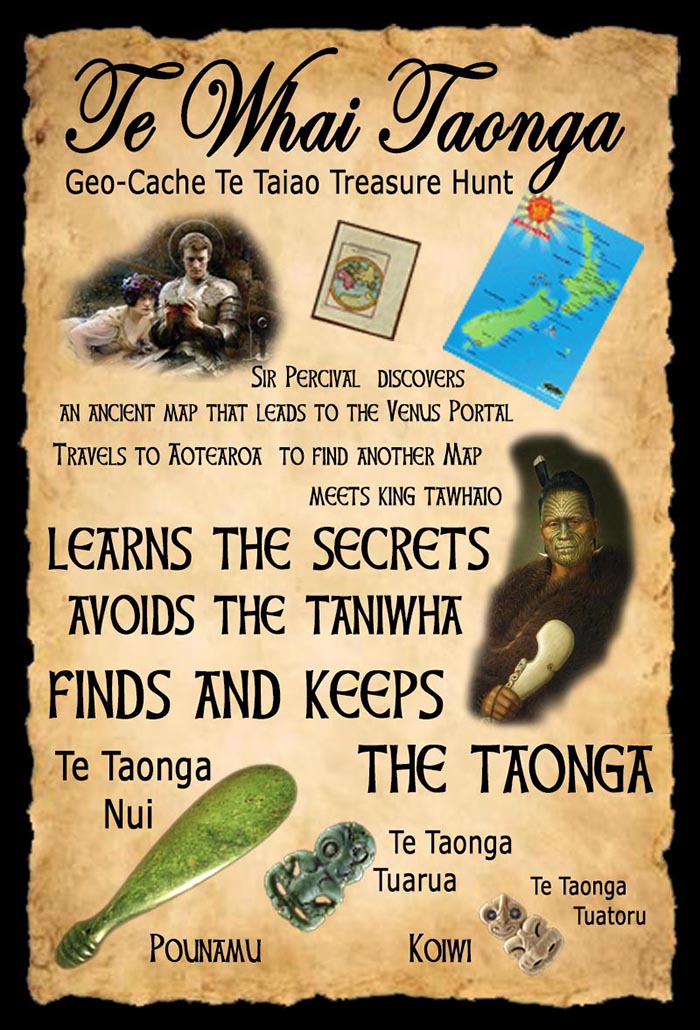 Secret of The Maps Sign in required.
 COMING SOON... WWW.MEREMERE.STORE watch this space...
The People in Meremere
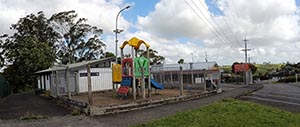
A small community in New Zealand's Waikato region, are diverse, with a significant Maori population (around 46% in 2023), alongside substantial European,
Pasifika, and Asian groups, reflecting a blend of indigenous heritage and multiculturalism, with a generally younger median age and varying income/education levels, striving for community pride and spirit despite current and historical challenges of crime and neglect.
Key Characteristics (Based on 2023 Census Data):
Ethnicity:
Mixed, with large Maori (46.1%) and European (55.5%) populations, plus significant Pasifika (16.2%) and Asian (10.5%) representation.
Age:
A relatively young community, with a median age of 32.4 years (younger than the national average), and nearly a third under 15.
Language:
Primarily English-speaking (94.8%), but with notable Maori (9.4%) and other languages (Samoan, etc.) spoken, indicating cultural vitality.
Background:
A portion (18.3%) were born overseas, contributing to the diversity.
Community Goals:
Historically, Meremere has aimed to build pride, vibrancy, safety, and strong community spirit, particularly for youth, with ongoing community planning.
Community Context: Maori Identity:
As part of the Waikato region, Meremere has strong connections to Waikato iwi (tribes), and Maori language and cultural practices are valued.
Education
Meremere School is a co-educational state primary school, with a roll of 10 as of July 2025.
The school became a full primary school in 2019, introducing classes for Year 7 and 8.
A previous Meremere School operated from 1894 to 1990.
Evolution:
The community has seen population growth, evolving from earlier periods (e.g., the 2001 data shows a much higher Maori percentage and lower overall numbers) as it works towards development goals.
In essence, Meremere is a culturally rich, evolving community with strong Maori roots, embracing multiculturalism, focusing on collective improvement, youth engagement and creative activities.